Automate Dental Offices: Boost Revenue & Reduce No-Shows
Dental Automation, Practice Management, Patient Engagement
Dental Office Automation: Fill Your Chair and Reduce No‑Shows on Autopilot
As a senior software engineer working with multi‑location dental groups and agencies, I see the same pattern repeatedly: packed schedules on paper, but empty chairs in reality. The gap between those two is where automation, done right, quietly adds hundreds of thousands in recovered revenue each year.
The No‑Show Epidemic in Dental Practices
Across the U.S., typical dental practices lose 12–18% of appointments to no‑shows, with some reports stretching to 15–20% depending on patient mix and appointment type (DentRecall, SamaraWell). Pediatric and Medicaid‑heavy offices are hit even harder, often in the 25–38% range. New patient and hygiene visits are especially vulnerable, with no‑show rates of 15–30% and 18–22% respectively.
On the other end of the spectrum, top‑performing practices using robust automation and multi‑channel reminders consistently sit under 5%, with elite offices reporting 1–4% no‑shows (Henry Schein One, DentalBase, Solutionreach). The delta between 18% and 4% is not “better patients”; it is better systems.
Automated Appointment Reminders via SMS and Email
From a technical perspective, no‑show reduction is a communication and friction problem. Patients forget, plans change, and rescheduling is often painful. Modern reminder systems solve this with AI‑assisted, omnichannel messaging: SMS for immediacy, email for detail, and links for one‑tap confirmation or rescheduling. By 2026, vendors are layering in personalization, optimal send‑time prediction, and richer analytics across channels.
At implementation level, most agencies and DSOs integrate their practice management system (PMS) with a reminder microservice that listens for upcoming appointments and triggers workflows. A simplified Python‑style example using a hypothetical messaging API might look like this:
from datetime import datetime, timedelta

def build_reminder_message(appointment):
    patient = appointment["patient_name"]
    time_str = appointment["start_time"].strftime("%A, %B %d at %I:%M %p")
    return (
        f"Hi {patient}, this is {appointment['practice_name']}.\n"
        f"Reminder: your dental appointment is on {time_str}.\n"
        "Reply C to confirm or R to reschedule."
    )

def send_sms(api_client, phone, message):
    api_client.send_sms(
        to=phone,
        body=message,
        channel="transactional"
    )

def schedule_reminders(api_client, appointments):
    for appt in appointments:
        if appt["status"] != "scheduled":
            continue

        hours_until = (appt["start_time"] - datetime.utcnow()).total_seconds() / 3600

        if 46 <= hours_until <= 50:
            # 48-hour reminder window
            send_sms(api_client, appt["patient_phone"], build_reminder_message(appt))

        if 22 <= hours_until <= 26:
            # 24-hour reminder window
            send_sms(api_client, appt["patient_phone"], build_reminder_message(appt))
In production, you would pair SMS with branded email templates, track delivery and response events, and write back confirmations to the PMS. The key is consistency and low friction: every appointment gets a sequence, every message offers a simple action, and every response updates the schedule automatically.
Recall Campaigns: Hygiene and Preventive Visits on Autopilot
Hygiene and recall visits are both clinically critical and among the highest‑risk categories for no‑shows. Yet many practices still manage recalls with manual lists and ad‑hoc phone calls. From an engineering lens, recall is a classic recurring‑event problem: every completed exam or cleaning should schedule its own future outreach.
A typical workflow:
When an appointment is completed, compute the next due date (e.g., 6‑month hygiene).
Insert a recall record into a queue with patient preferences (SMS/email) and constraints (days/times).
Run a daily job that looks ahead 2–4 weeks and launches multi‑touch campaigns until the patient books or opts out.
With proper segmentation (family accounts, insurance changes, procedure history) and AI‑optimized timing, agencies can turn hygiene recall into a predictable, automated revenue stream instead of a manual scramble at month‑end.
Patient Reactivation: Mining the “Lost” Patient Database
Most practices sit on years of dormant patient records: people who came once, or who quietly stopped scheduling. Reactivation is where automation and data really shine. Instead of generic mass email blasts, you can use rules and AI‑driven insights to prioritize and personalize outreach based on last visit, treatment history, and estimated lifetime value.
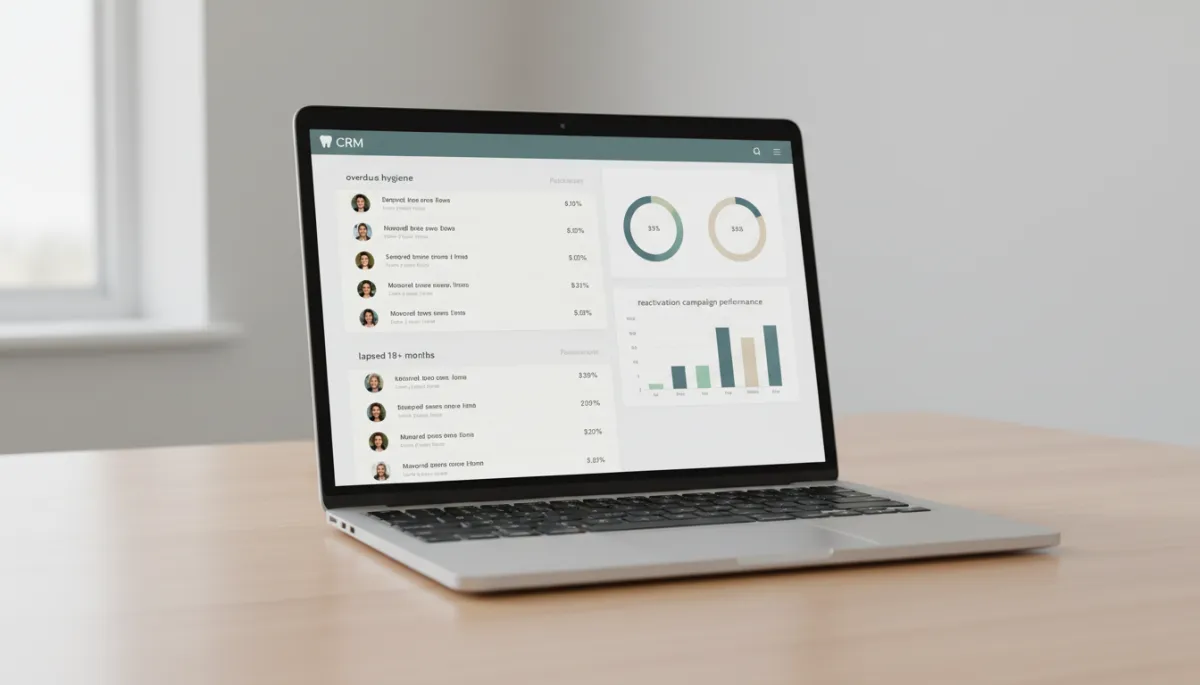
Segmented reactivation campaigns routinely recover 5–10% of dormant patients within 90 days.
Technically, this looks like a scheduled job that queries your data warehouse or PMS API for patients with no visit in, say, 12+ months and no upcoming appointment. You then feed these cohorts into journeys that might include:
Educational emails about the importance of routine care, tailored to age and treatment history.
Limited‑time offers (e.g., complimentary whitening with exam) where compliant and appropriate.
SMS nudges with direct links to online booking or a virtual consult.
Combined with flexible payment options and telehealth triage where applicable, this data‑driven reactivation can materially grow active patient counts without additional ad spend, aligning with 2026 best practices in dental patient engagement and CRM‑driven outreach.
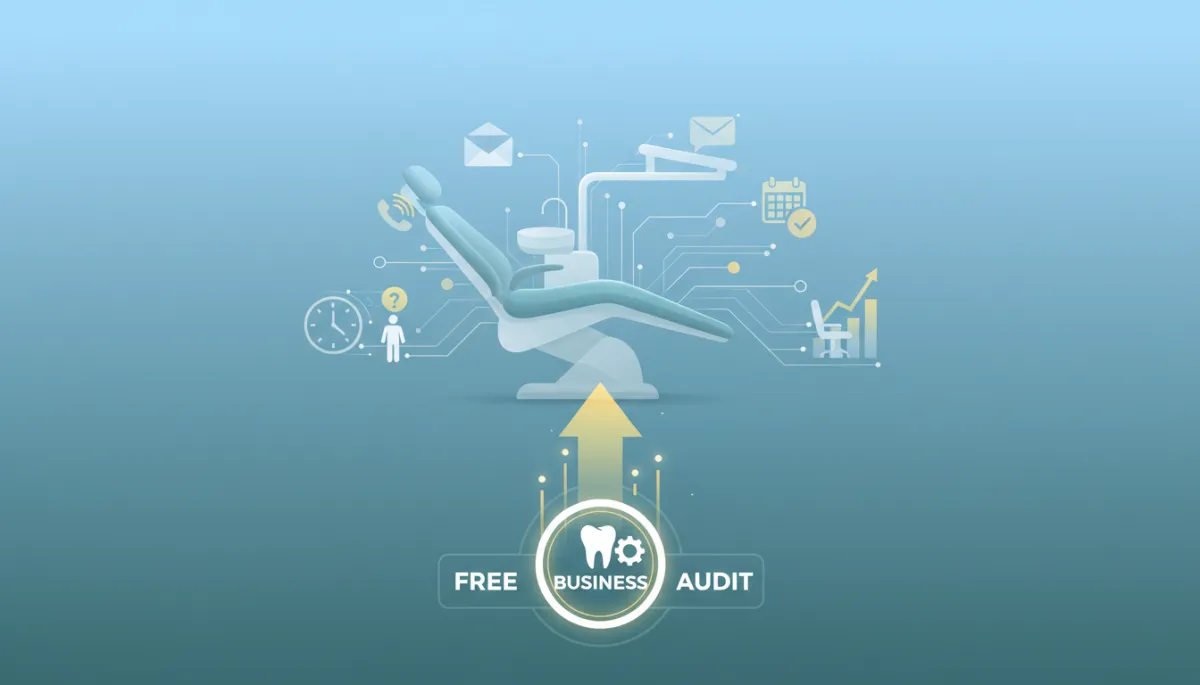
For Agencies and Multi‑Location Groups: Get a Free Business Audit
If you are an agency or a growth‑focused DSO, the opportunity is not just to “turn on reminders,” but to design an end‑to‑end automation layer: real‑time PMS integration, event‑driven messaging, analytics pipelines, and experimentation frameworks that move no‑show rates toward that <5% benchmark while simultaneously increasing recall and reactivation volume.
I offer a Free Business Audit specifically for businesses_agencies serving dental practices. In this audit, we will:
Map your current tech stack (PMS, CRM, messaging, analytics) and identify integration gaps.
Benchmark your clients’ no‑show, recall, and reactivation performance against 2026 industry data.
Propose a practical automation roadmap, including sample workflows and API‑level architecture you can implement or resell.
If you are ready to fill more chairs, stabilize revenue, and give front‑desk teams their time back, let’s start with data, not guesswork. Request your Free Business Audit, and we will translate benchmarks and code into a concrete automation plan for your dental clients.
